Vehicle scrapping process in Jaipur, step by step
Here's everything that happens between your first call and the final certificate, in order. You don't need to visit our yard, and most of the time you won't need the RTO either.
The vehicle scrapping process in six steps
1. Get a price
Call, WhatsApp or use the form to send the registration number, model, year and a few photos. We'll call back with a price range within 24 hours.
2. Free inspection
We see the vehicle where it's parked, match its chassis and engine numbers to the RC, and confirm the final price.
3. Papers and agreement
You share the original RC, your ID and bank details. We check the Vahan record for loans, challans or other blocks, and you sign the owner's undertaking.
4. Pickup and payment
Our truck collects the vehicle at a time that suits you, and the money reaches the owner's bank account the same day.
5. Deposit and your COD
We deface (punch) your original RC in front of you and issue your Certificate of Deposit on Vahan. It's the proof that we've accepted the vehicle for scrapping.
6. Dismantling and your CVS
The vehicle is depolluted and taken apart. Once the chassis number is destroyed, your Certificate of Vehicle Scrapping is issued, and we send it with the defaced RC to your RTO to get the registration cancelled.
How long does vehicle scrapping take?
| Stage | Usual time |
|---|---|
| Price range on the phone | Within 24 hours of your request |
| Inspection and pickup | 24 to 48 hours after we agree the price |
| Payment | On pickup day |
| Certificate of Deposit | Normally a few working days after pickup |
| Certificate of Vehicle Scrapping | Within 60 days of the COD, as Rajasthan's policy requires |
| Registration cancelled | After the RTO receives the defaced RC and the CVS |
What happens inside our scrapping yard
Every vehicle passes through the same four stages, always in this order.
1. Depollution
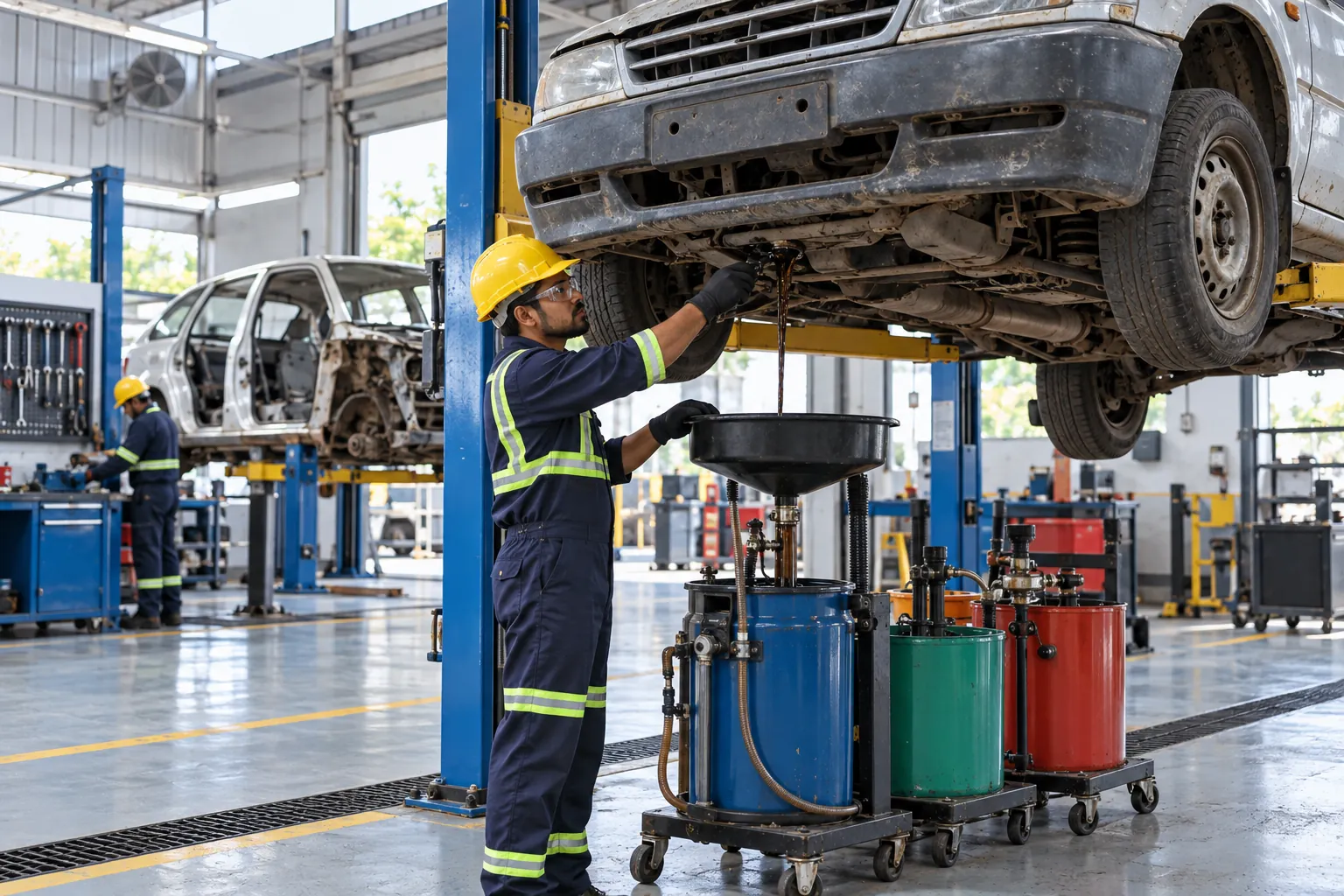
First, we make the vehicle safe. The battery, airbags and any gas cylinder are removed. Fuel, engine oil, gearbox oil, brake fluid and coolant are drained, and a machine recovers the AC gas so it doesn't escape into the air. Each fluid goes into its own labelled container for authorised recyclers.
2. Saving good parts
Working parts are removed by hand: engines, gearboxes, doors, lights, alternators, starters and more. They're cleaned, tested and put up for sale as used spares.
3. Dismantling and the chassis cut
Wiring, glass, seats, plastic trim and tyres are separated out. The section of the frame with the chassis number is cut away and destroyed, so the vehicle can never return to the road.
4. Metal recycling
What's left is mostly steel. It's pressed into bales and sent to steel mills. Aluminium, copper and other metals are sorted and sent to their own recyclers.
After scrapping: using your vehicle scrapping certificate
Keep your COD safe
It's valid for three years from the date of issue.
Use it or sell it
Use it when you register a new vehicle, or sell it if you don't need it. CODs for government-owned vehicles can't be sold. See COD and benefits.
Cancel your insurance
Send the CVS to your insurer. Many refund part of the unused premium.
Close your FASTag
Close it with the issuing bank and get the balance back.
File the CVS
It proves the vehicle no longer exists.
What we need from you to scrap a vehicle
The basic papers
The original RC, the owner's PAN and Aadhaar, and the owner's bank details. Add the bank NOC if the vehicle had a loan.
Special cases
Owner died, RC lost or vehicle from another state? The documents required page tells you exactly what to do.
Your pickup area
Not sure we cover your area? See our pickup areas.
Vehicle scrapping process FAQs

Start with a free scrap price
Send the registration number and a few photos, and we'll call back with a price within 24 hours.